About our public school in Punjab
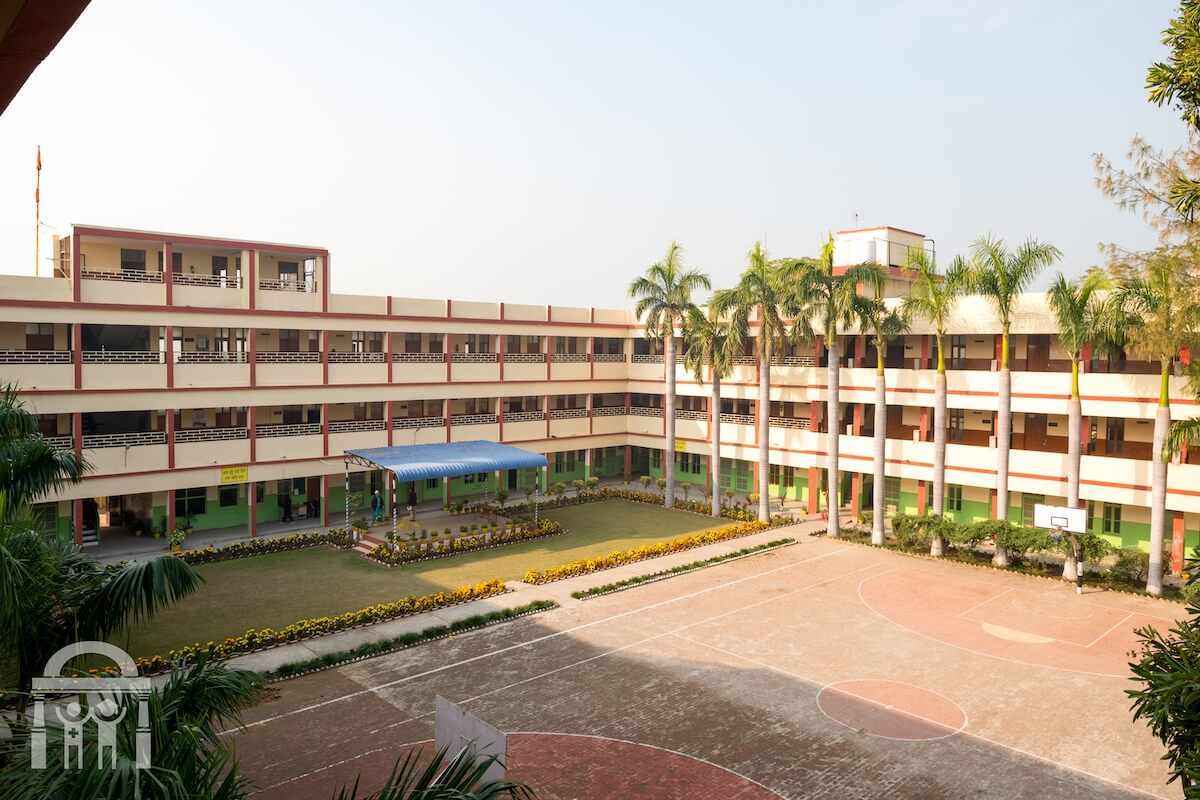
Established in 1987, Guru Nanak Mission Public School in Dhahan-Kaleran has grown from a few small primary-grade classrooms to a 22,227.8 sq. m. campus with approximately 1600 students in kindergarten through senior secondary.
The school is located in in the Shaheed Bhagat Singh Nagar District in Punjab. It is operated by Guru Nanak Mission Medical and Educational Trust, a not-for-profit organization.
Program offerings include:
The school is affiliated with the Central Board of Secondary Education (CBSE) in New Delhi. It offers an English medium, co-educational curriculum to students from any background, religion, nationality, race or other immutable characteristic. Punjabi is taught from LKG onwards, and Hindi is taught from UKG onwards.
The school offers fee subsidies to families who demonstrate financial need.
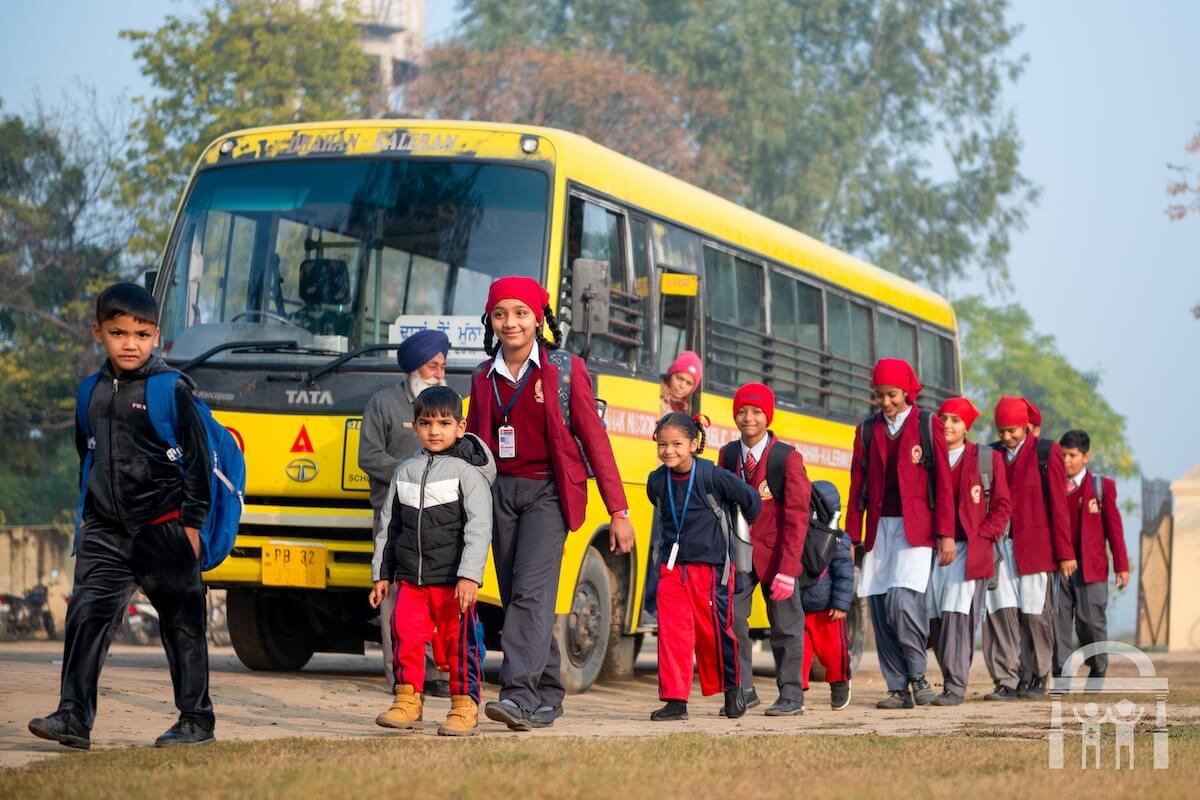
The school’s fleet of 24 buses transports children to and from the school from around 140 surrounding villages.
Our goal
Guru Nanak Mission Public School operates with the goal of providing quality education to every child in its vicinity, on a physical, intellectual, emotional and spiritual level. These are our four pillars of education.
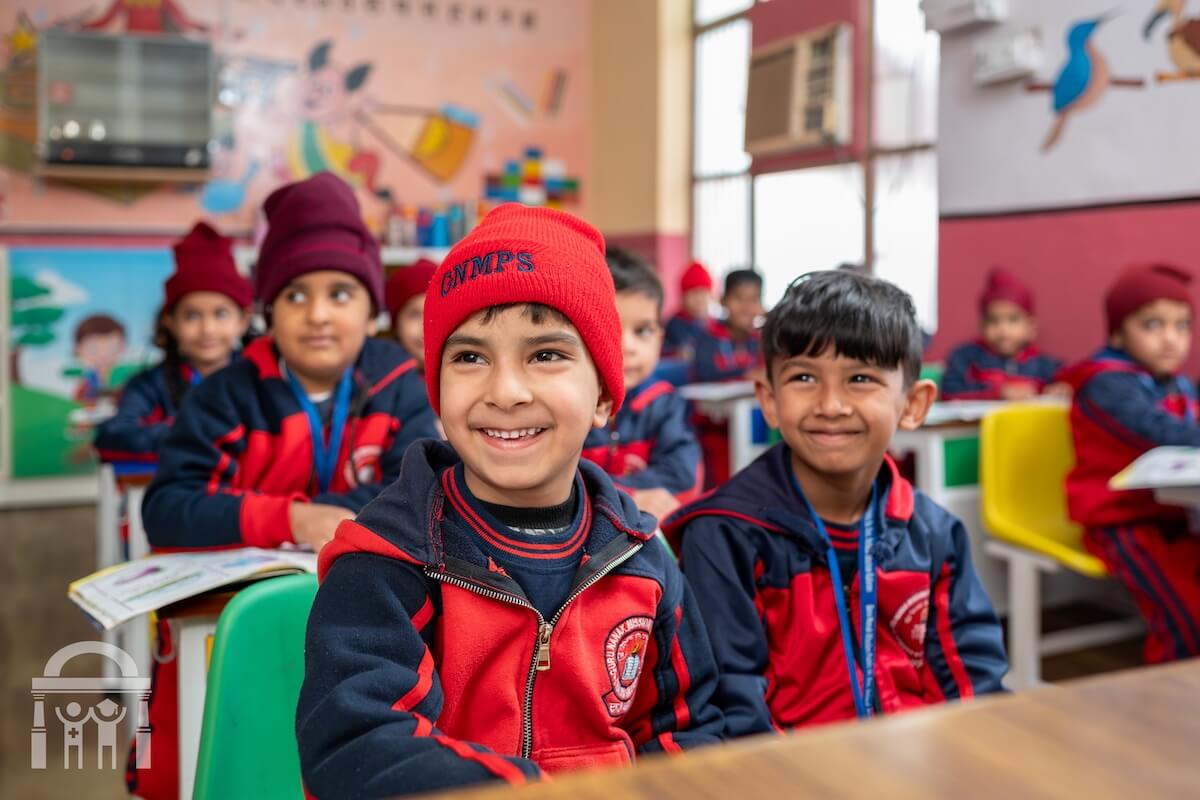
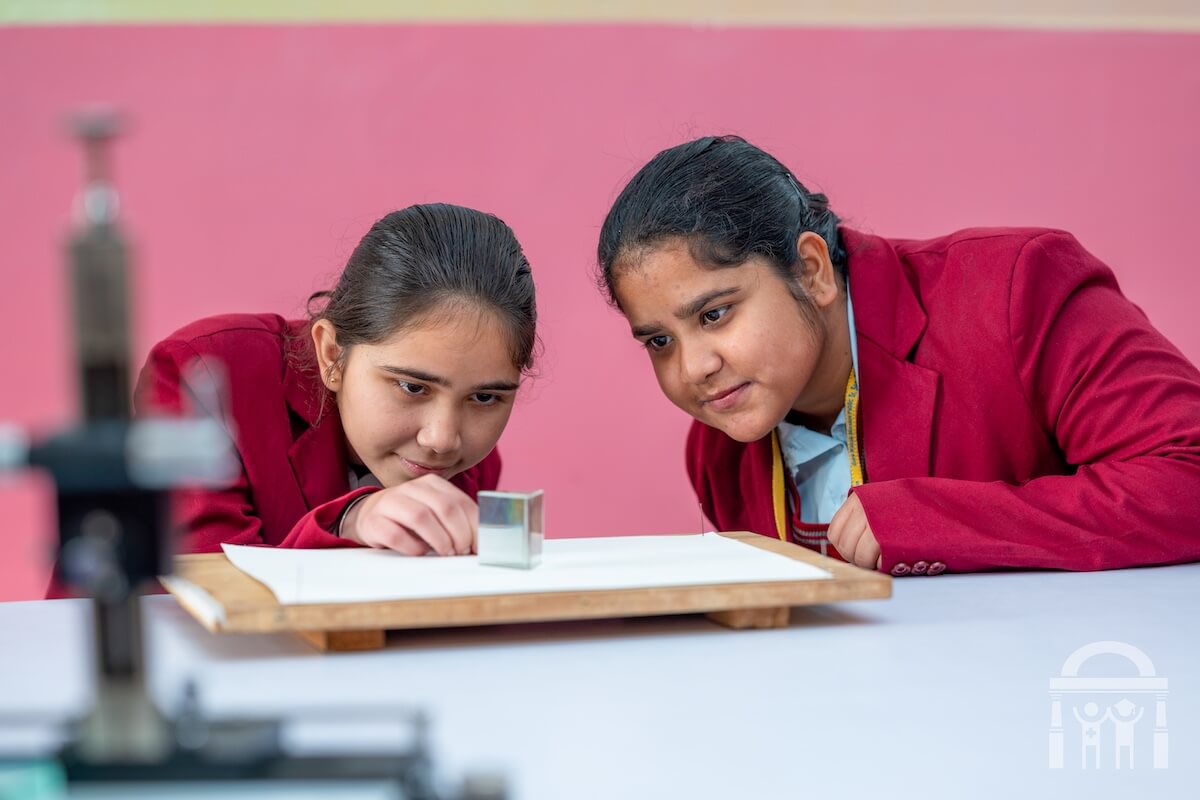
We believe every child has the right to a quality education. Every child is born with hidden talents. And, every society owes it to their children to provide them with learning opportunities to manifest those talents.
We achieve our goal by ensuring access to education through reasonable fees, subsidies, and transportation services to roughly 140 surrounding villages.
Our mission and vision
To achieve our goal, we have formulated our mission and vision statements as follows:
Our mission
To manifest the hidden talents and emotional awareness of every child in a safe, age-appropriate and nurturing educational environment.
To provide strong, modern learning foundations in an accessible way to develop the learning ability and transferable skills of every child within our reach.
To broaden the scope of knowledge acquired by every child, so they can develop their strengths and function as well-informed, socially-aware citizens.
To motivate pupils to become responsible members of society, where they can meet economic demand while pursuing a career related to their interests.
Our vision
Guru Nanak Mission Public School will be a centre for excellence in primary and secondary education – one that enhances the development, skill and well-being of children, thus improving future communities that they lead and participate in.
Our history
Operating under the umbrella organization of Guru Nanak Mission Medical and Educational Trust, the school was founded by Sardar Budh Singh Dhahan – an activist and believer in social justice and advancement in Punjab.
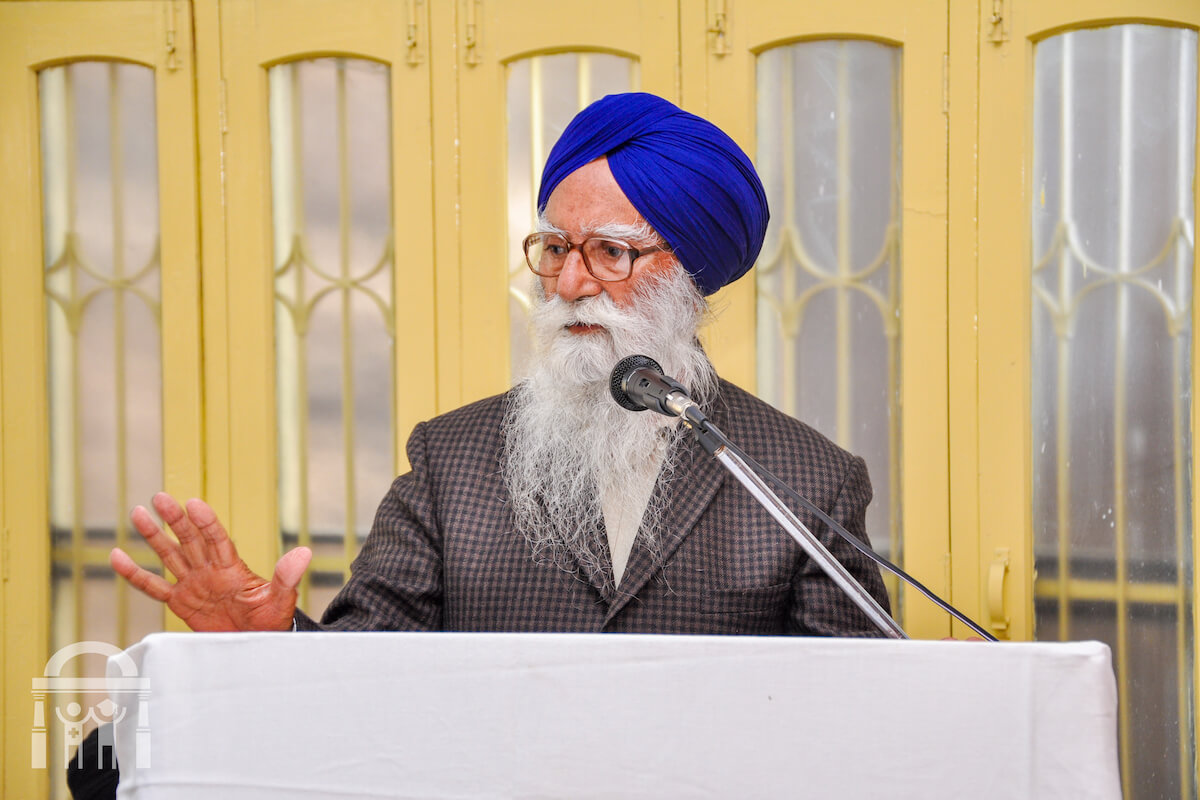
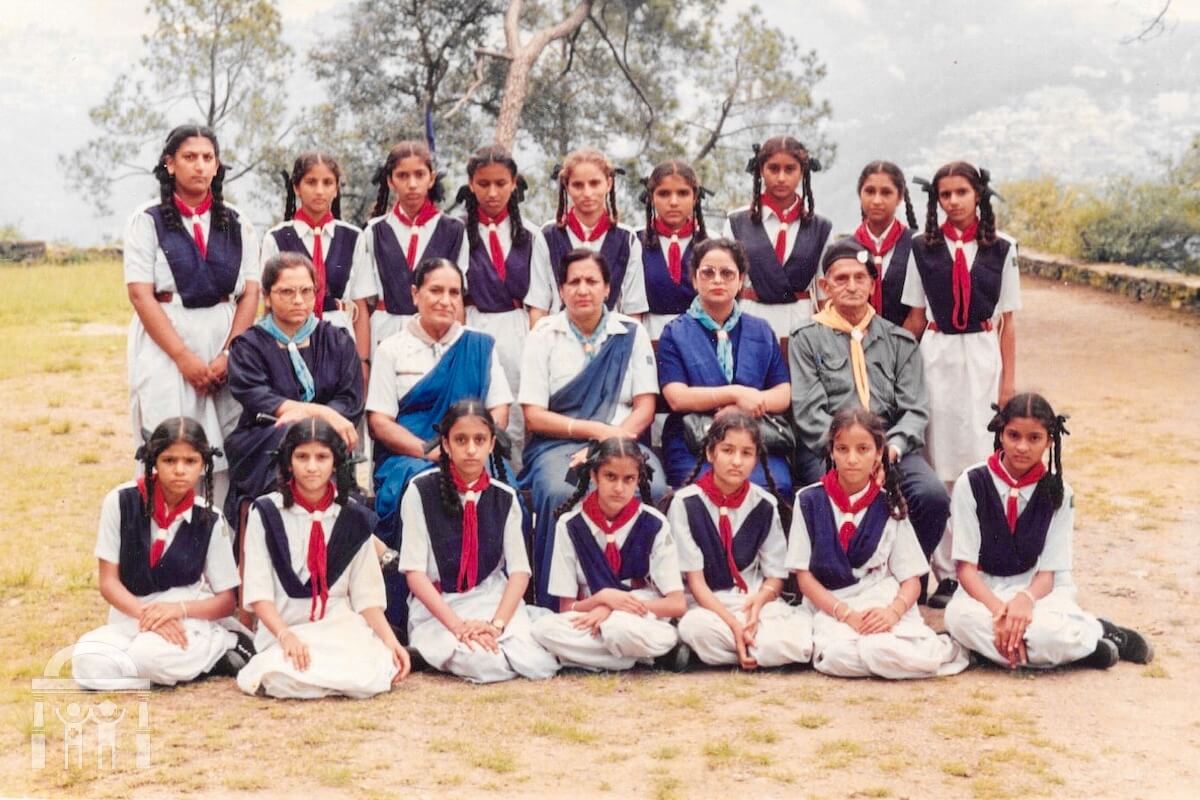
The goal was to “uplift the standard of children of rural areas by giving them quality education at reasonable fees.”
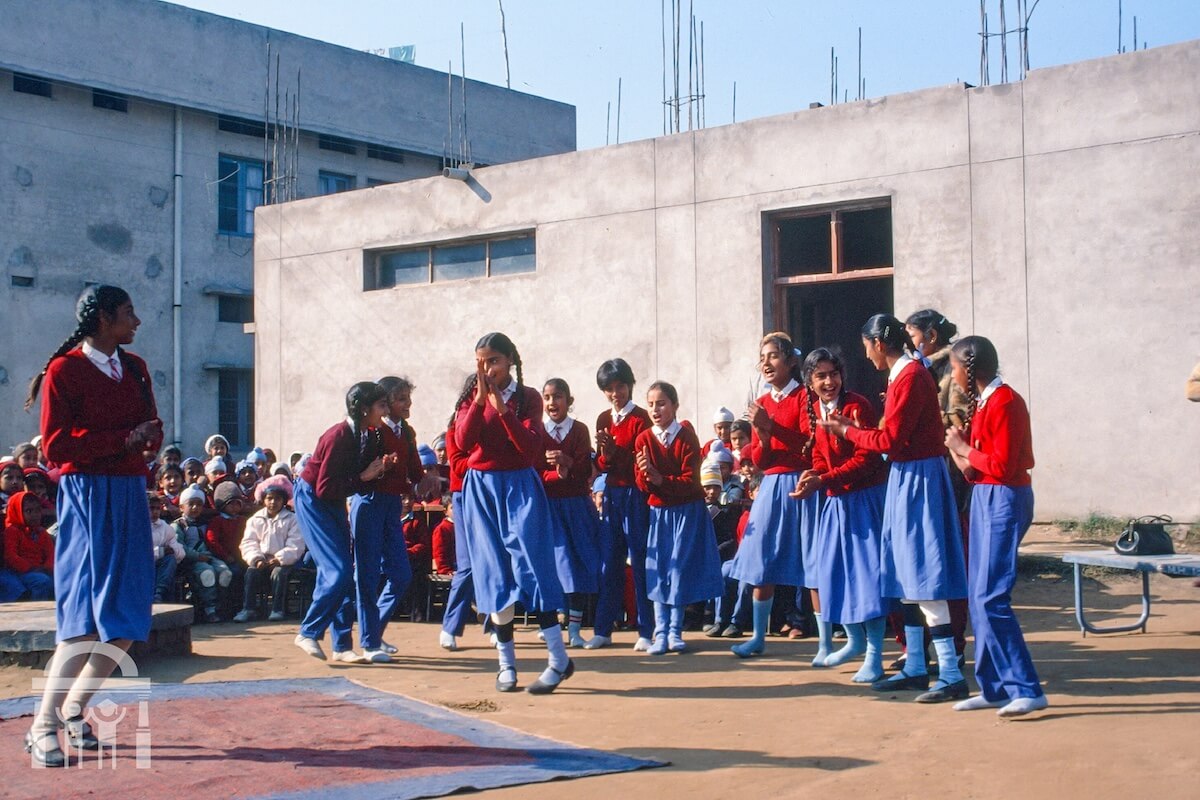
In 1987, the school opened with an intake of 200+/- students in nursery to third grade. Instruction was held in the nearby hospital. It was affiliated with the Punjab School Education Board (PSEB).
In 1988, schooling for grades four and five were added.
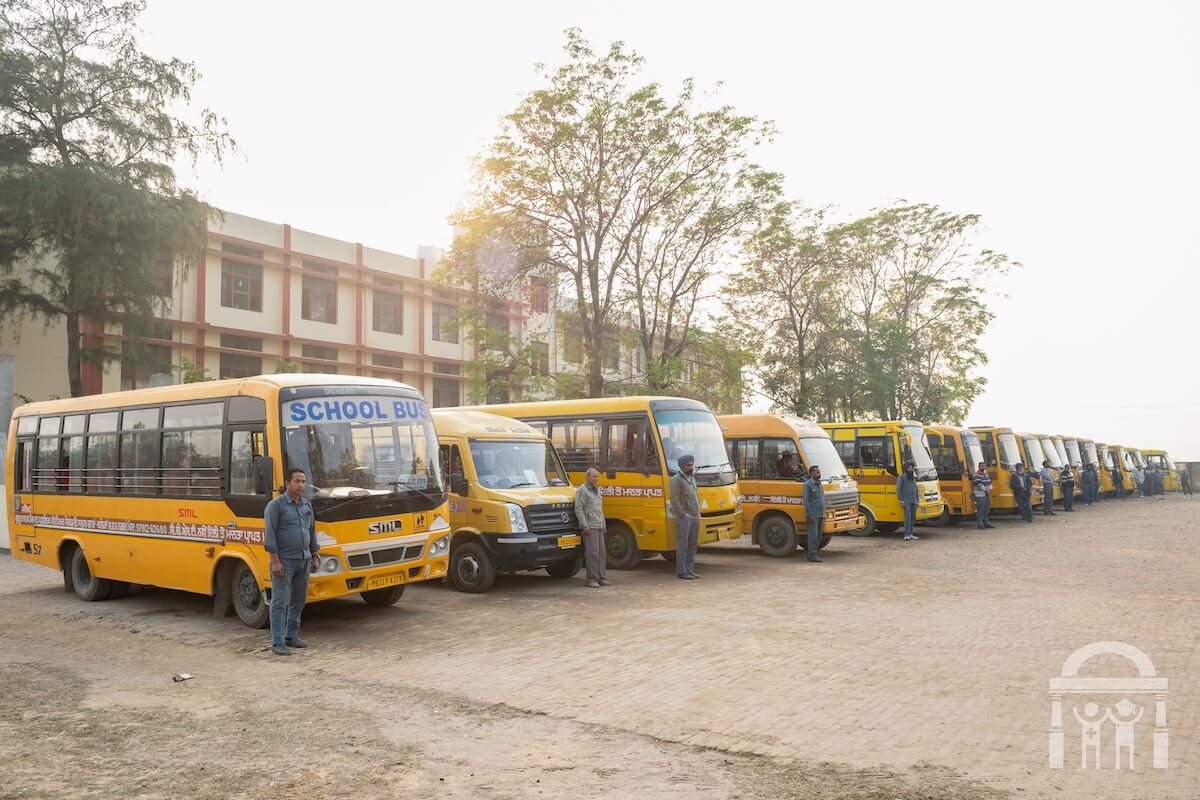
Seeing that distance was limiting for families wanting to send their children to school, Mr. Dhahan arranged for an auto rickshaw to transport children from surrounding villages. This service evolved to van rides and, eventually, a fleet of 24 buses servicing around 140 villages.
In 1993, a dedicated, ‘C-shape’ building was constructed to house the growing student population and a local demand for higher grades.
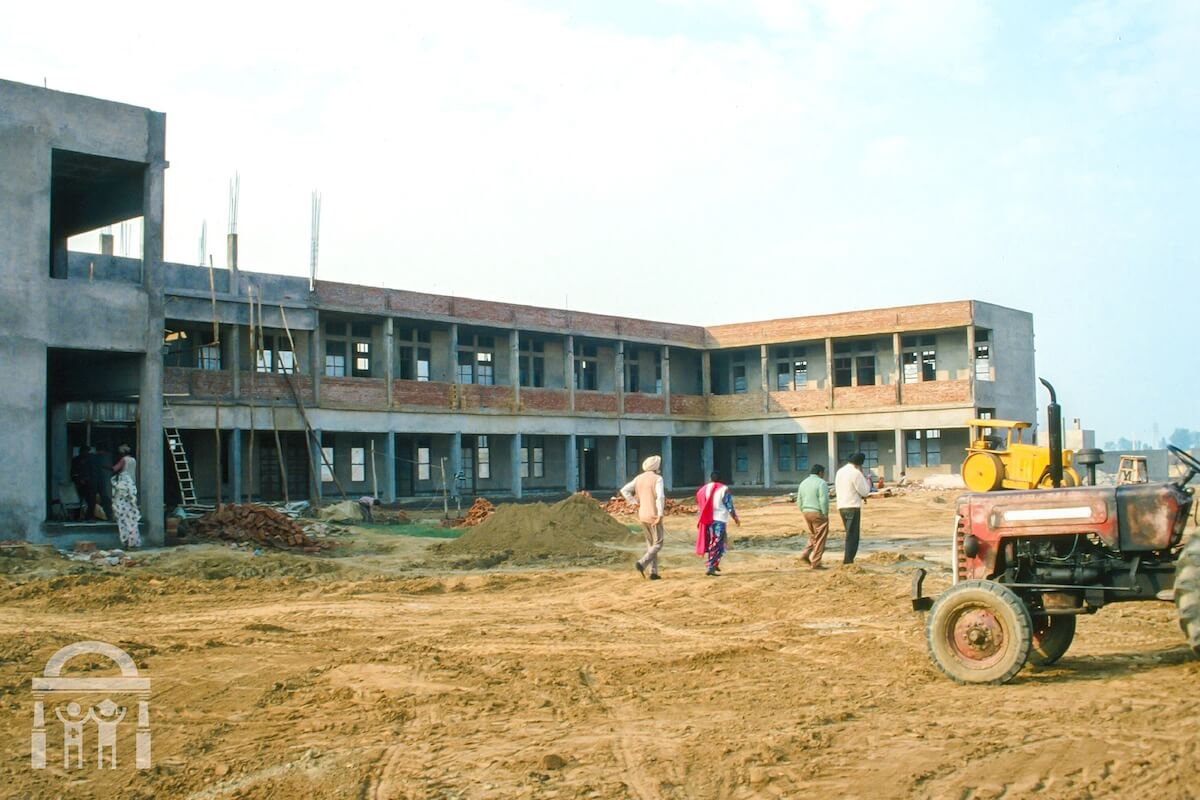
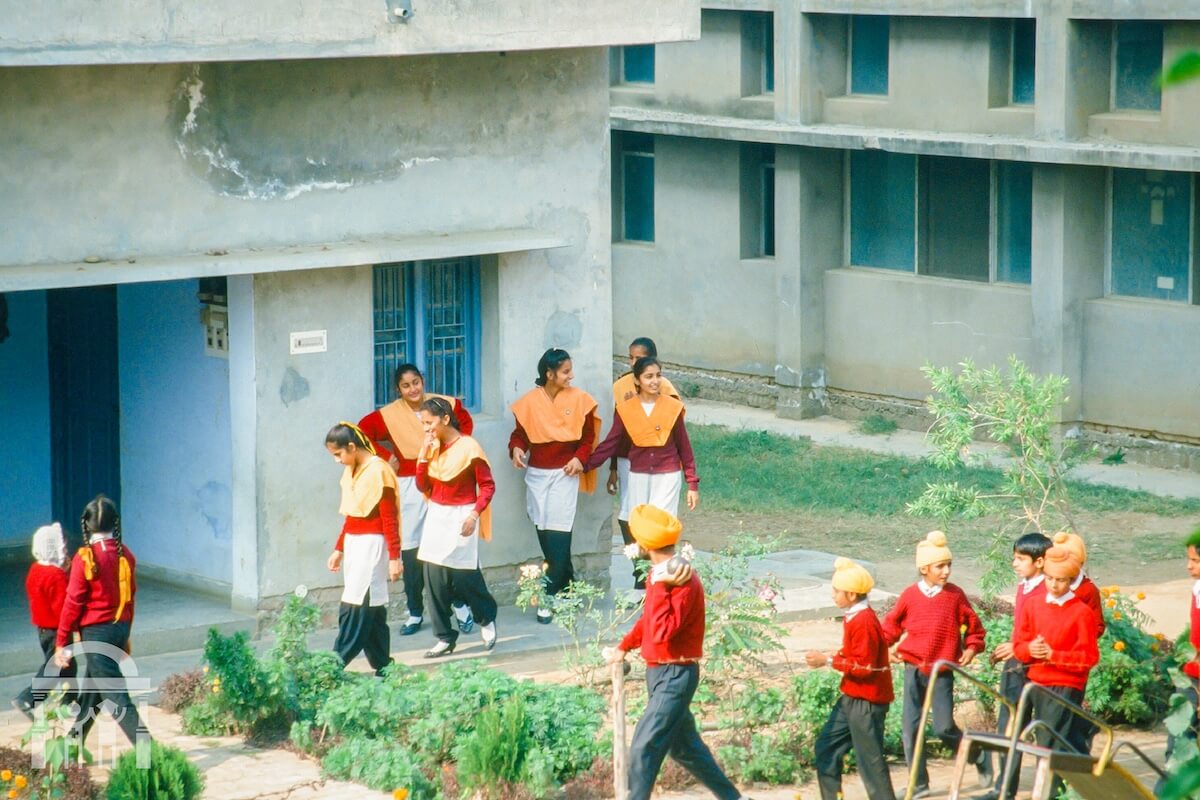
In 1994, the school opened to secondary school students, up to grade 10.
By 1997, new extensions were built to accommodate a Senior Secondary School program. It offered grade 12 graduation (i.e. 10+2) within a reasonable distance to many villages.
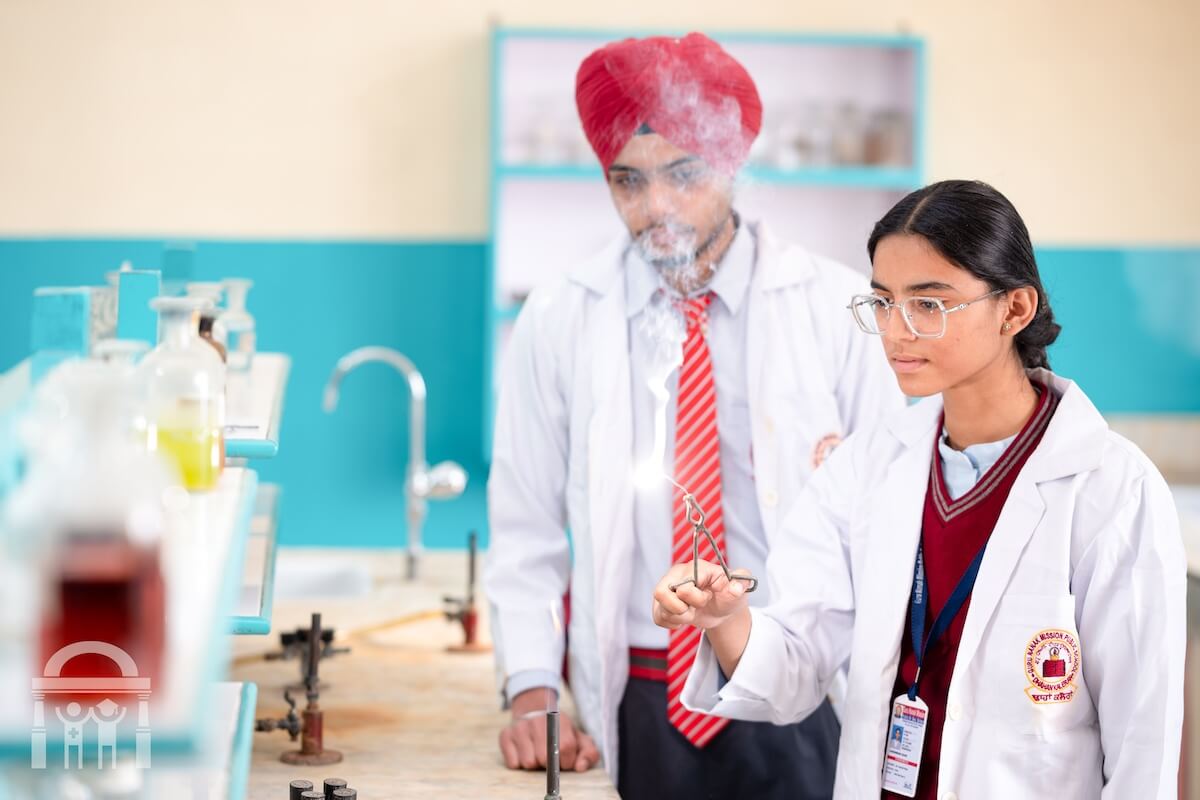
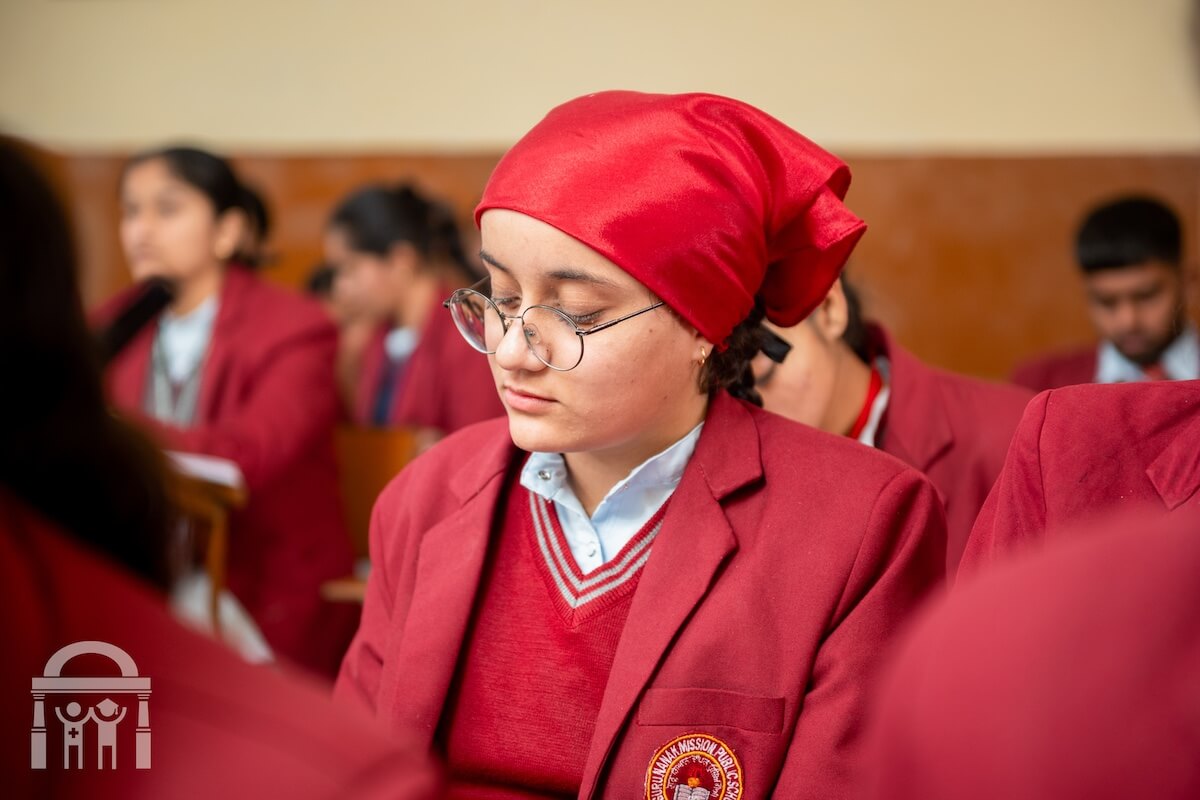
The school population grew to 850 +/- pupils.
The grade 12 option has since allowed local students to apply to post-secondary institutions.
In 2006, the school became affiliated with the Central Board of Secondary Education (CBSE) in New Delhi. This meant it could offer an English medium, co-educational curriculum across all of its class levels. It grew to a capacity of about 1300 students.
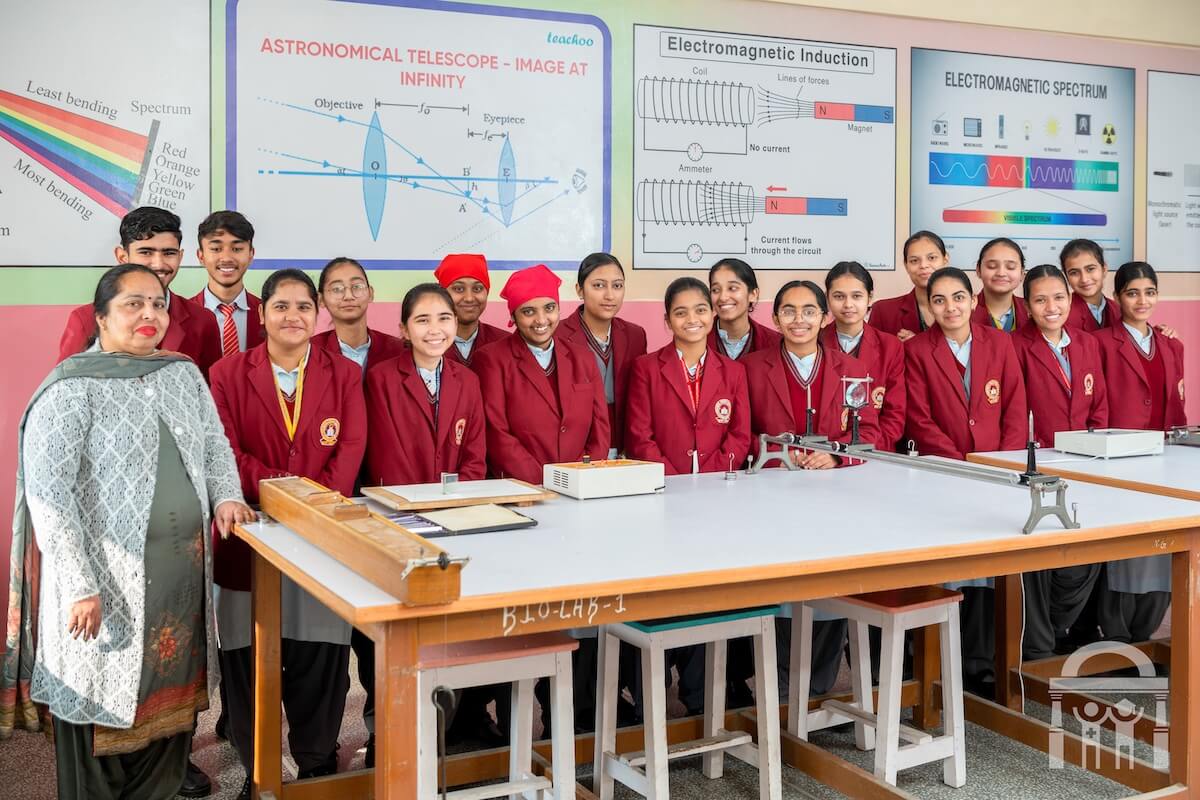
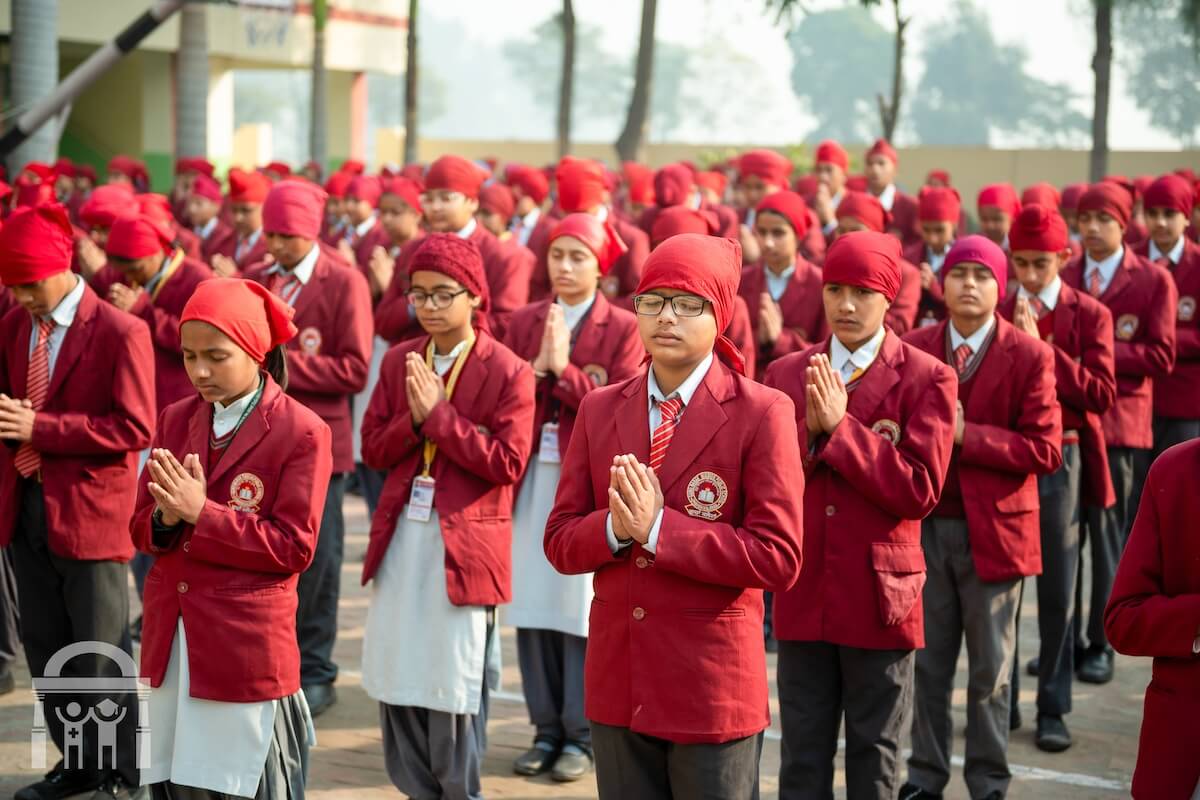
Today the school educates approximately 1600 students yearly.
The faculty, facilities and programming have continued to evolve and modernize.